

At a glance
A serious diagnosis is a lot to navigate — understanding your care plan, managing costs, taking time away from work, and finding emotional support. You don’t need to take in everything at once. Use the steps below for whatever you need right now.
A cash benefit tied to certain diagnoses.
If you’re enrolled in Critical Illness insurance and diagnosed with a major illness — heart attack, stroke, end-stage renal failure, major organ failure, or invasive cancer — the plan pays you a lump sum of $10,000 or $20,000 directly to use however you need it. Plus, if your diagnosis leads to a hospital stay and you’re enrolled in Hospital Indemnity insurance — the plan will pay you $500 for initial hospital admission and $250 per day, up to 31 days.
Right after diagnosis
There’s no need to have a plan yet. Start here.
Get help understanding your options. A health care concierge through Health Advocacy Solutions (HAS) is available through all LSC Medical Plans and can help you find the right specialists, understand your diagnosis and coverage, and estimate what care will cost.
Talk to someone. The Employee Assistance Program (EAP) through Carelon Wellbeing is free, confidential, and available 24/7 for you and your household — you don’t need to be enrolled in anything else to use it, and you can book up to six free counseling sessions per issue, per year.

If it’s cancer
Carrum Health connects you with some of the country’s leading cancer centers of excellence, based on the latest research.
Get matched to expert treatment. If you or a covered dependent (18+) are enrolled in an LSC Medical Plan and diagnosed with cancer, Carrum Health connects you to experts who consult with your provider to confirm your diagnosis and build a treatment plan tailored to you — including treatment from leading centers for breast, thyroid, and blood cancers.
You get a dedicated care navigator to coordinate your entire cancer journey, 24/7 access to Carrum Health resources including virtual mental health support, and ongoing virtual support from cancer-certified nurses for up to 2 years. Sign up to learn more at carrum.me/lsc.

If it’s diabetes, hypertension, or another chronic condition
Omada gives you a personalized program and the equipment to manage it day-to-day, at no cost to you.
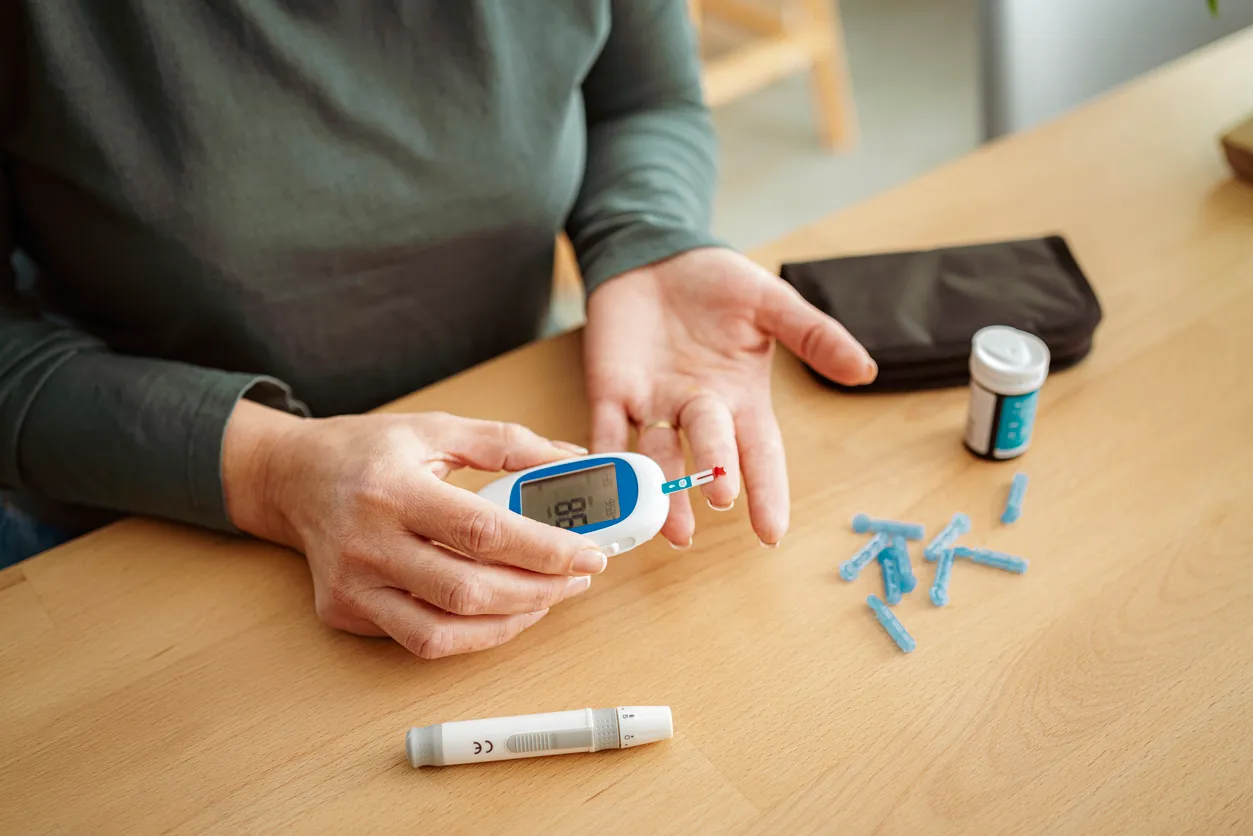
Diabetes: receive two continuous glucose monitors, a blood glucose meter, lancets, and test strips.
Hypertension: receive a connected blood pressure monitor and a smart scale.
Apply at omadahealth.com/lsc — you’ll get an eligibility email within 48 hours, then set up your account, receive your welcome kit, meet your care team, and start your program.
Paying for care
A few benefits are built to soften the financial side of a serious diagnosis.
File a Critical Illness claim, if enrolled. A qualifying diagnosis (heart attack, stroke, end-stage renal failure, major organ failure, or invasive cancer) pays you a lump sum of $10,000 or $20,000, paid directly to you for any purpose. File at metlife.com/mybenefits, by phone, or through the MetLife Mobile App, entering LSC Communications as your organization name.
If you’re hospitalized, Hospital Indemnity, if enrolled, pays $500 for the admission plus $250 per day for up to 31 days. If your condition requires inpatient rehabilitation, you’ll receive $100 per day for up to 15 days — paid directly to you.
Use your HSA or Health Care FSA. Both let you pay eligible medical, prescription, and treatment expenses on a pre-tax basis.

Time off & your income
Treatment and recovery often mean time away from work — here’s what protects you while you’re out.
Family and Medical Leave (FMLA) covers up to 12 weeks of leave to care for yourself, or General Leave of Absence for documented time off outside FMLA — talk to The Hartford about eligibility and which fits your situation. You may qualify for state-provided leave. Contact your state agency for details. Don't forget to inform your manager and Human Resources.
Short-Term Disability, if approved by The Hartford, pays a weekly benefit of 60% of your pre-disability base pay for up to 26 weeks, starting after a 7-day waiting period.
If your treatment runs longer, Long-Term Disability can begin on day 181, paying 50% of your base pay (or 60% with Buy-Up LTD), up to $10,000 a month.
On a Leave of Absence, you’ll be direct-billed for most benefits (not your HSA, FSAs, or commuter benefits).

Ongoing support
Whatever you’re managing, day-to-day support — physical and emotional — is available for as long as you need it.
Free, ongoing counseling. You and anyone in your household can use up to six free EAP counseling sessions per issue, per year. Connect anytime with Talkspace (enter: LSC Communications) for licensed counseling by text, voice, or video — no enrollment in benefits required.
Need to talk right now? A licensed behavioral health specialist is available 24/7 through Teladoc Health for $10 per visit, for anything from anxiety and mood, to sleep issues or life-transition challenges.
Managing joint or muscle pain along the way? Virtual Physical Therapy through Hinge Health is free for you and covered dependents 18+ enrolled in an LSC Medical Plan — no referral needed.
Simple things that help every day: deep breathing, journaling, keeping up with nutrition and sleep, and asking for help with chores or childcare when you need it.

Keep this handy through every step
Call the EAP any time — no enrollment required
If it’s cancer, sign up for Carrum Health for a dedicated care navigator
If it’s diabetes or hypertension, apply for Omada for your care team and equipment
File a Critical Illness claim if your diagnosis qualifies and/or Hospital Idemnity claim if you are admitted to the hospital
Use your HSA/FSA for eligible medical expenses
Talk to The Hartford about FMLA or a leave of absence
Check your eligibility for state-provided leave of absence by contacting the appropriate state agency
File a Short-Term Disability claim with The Hartford if you’ll be out of work
Keep using counseling services — EAP, Talkspace, or Teladoc — for as long as it helps
ON THIS Page